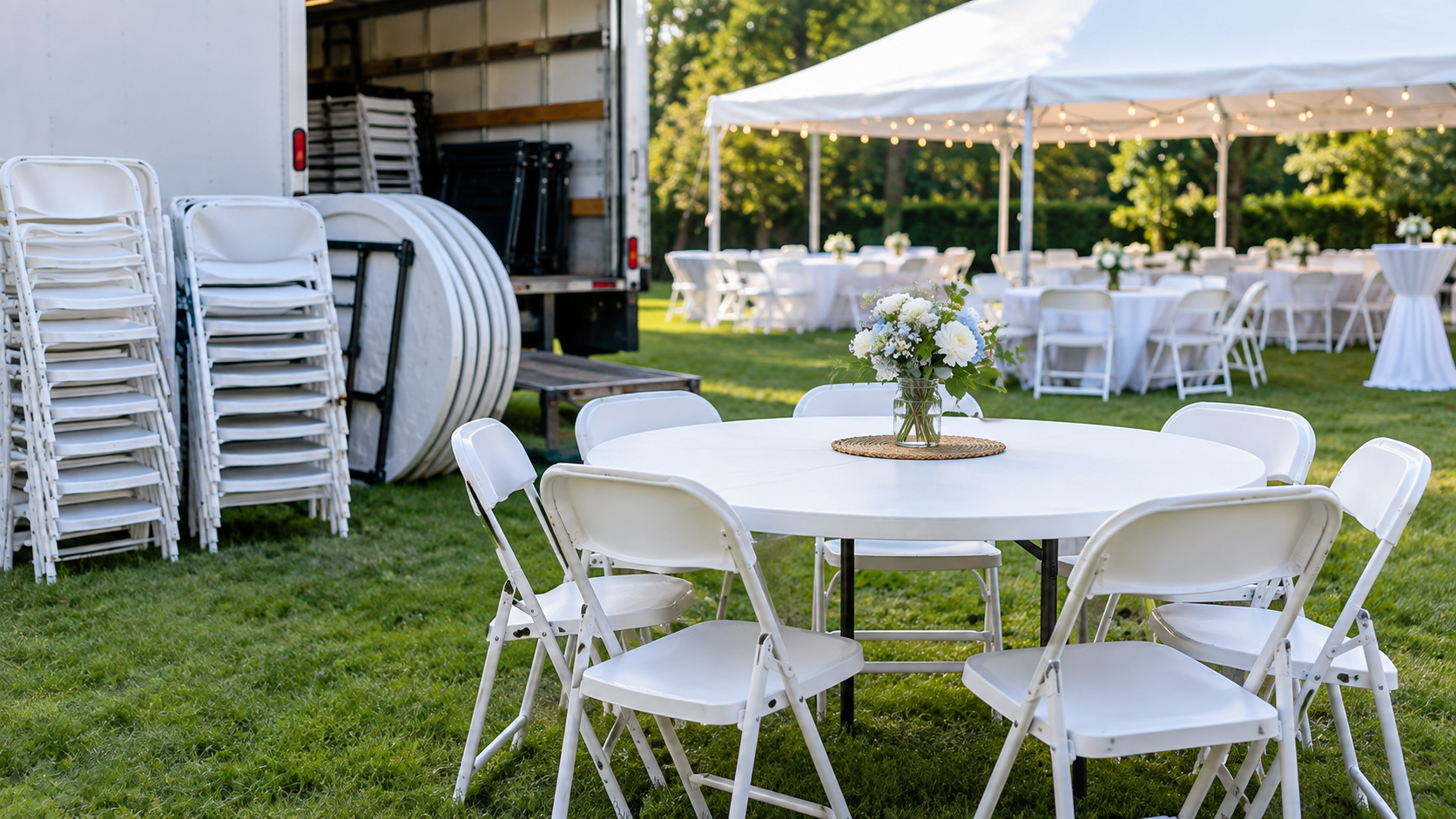
Rental of tables and chairs can be a practical business opportunity for entrepreneurs who want to enter the event rental industry. Weddings, birthday parties, corporate events, festivals, and private gatherings often need tables and chairs for a limited time. Renting saves customers from buying, storing, and maintaining event furniture. With the right inventory, pricing, delivery process, and booking system, you can build a profitable table and chair rental business. As your business grows, Rentopian can help you manage bookings, inventory, customers, payments, contracts, and daily operations from one place.
1. Research the Table and Chair Rental Market
Before purchasing inventory, find out what customers in your area actually need. A table rental business can serve weddings, birthday parties, corporate events, community gatherings, and many other occasions. However, the most popular products can vary by location. Research local competitors, event venues, planners, and decorators. Look at their product selection, pricing, delivery areas, and customer reviews. This will help you identify gaps in the local market and choose a clear target audience.
Pay attention to:
- Popular table and chair styles
- Average event sizes
- Local rental prices
- Delivery charges
- Wedding and party demand
- Competitor product gaps
This research can help you avoid spending money on inventory that does not generate enough bookings.
2. Choose and Plan Your Rental Inventory
Your inventory is the foundation of your business. You do not need a large collection when you start. Choose products that are durable, easy to clean, simple to transport, and likely to be rented regularly. A basic inventory could include folding chairs, round tables, rectangular banquet tables, cocktail tables, linens, chair cushions, and table covers. Your selection should match your target customers.
For example, a wedding-focused business may eventually need premium chairs and decorative furniture. A business serving schools, offices, and community events may get more value from durable folding furniture. Start with a manageable quantity and expand when demand supports it.
Track important details for every item, including:
- Quantity owned
- Quantity available
- Quantity reserved
- Purchase cost
- Rental price
- Condition
- Replacement cost
Good inventory management will become increasingly important as your number of bookings grows.
3. Set Your Rental Prices
Your rental price should cover more than the original cost of each table or chair. Cleaning, repairs, storage, insurance, labor, transportation, and payment fees can all affect your profit. Calculate your costs before setting your rates. Then compare them with local competitors to make sure your prices are competitive without sacrificing your margins.
You can offer:
- Per-item pricing
- Rental packages
- Delivery fees
- Setup and pickup charges
- Minimum order amounts
- Peak-season pricing
- Damage or replacement fees
Packages can make ordering easier for customers. For example, you could create a party package with tables and chairs for a specific number of guests. Review your pricing regularly as fuel, labor, inventory, and other business costs change.
4. Create a Simple Booking Process
A clear booking process helps prevent mistakes and keeps customer information organized. When you only have a few orders, phone calls, emails, or spreadsheets may be enough. As bookings increase, however, managing everything manually can become difficult.
An online rental booking software system can help organize bookings, availability, customer details, and payments in one place. Rentopian is designed to help rental businesses manage these processes while giving customers convenient ways to request or place orders.
Your booking process should capture:
- Customer information
- Event date
- Delivery address
- Rental items and quantities
- Delivery and pickup times
- Payment status
- Special instructions
Confirm the important details before the event so customers have an opportunity to make corrections.
5. Plan Delivery and Pickup
Delivery is a major part of running a table and chair rental business. Large orders can require significant vehicle space, loading time, and labor. Poor scheduling can lead to late deliveries and missed pickups. Create delivery zones based on distance from your storage location. Your delivery fee can then reflect distance, order size, or the level of service required.
Plan for:
- Loading time
- Travel time
- Setup requirements
- Vehicle capacity
- Driver availability
- Pickup windows
Avoid scheduling jobs too close together. Traffic, venue access, loading delays, and other unexpected issues can affect your schedule. As order volume grows, delivery scheduling becomes an important part of daily operations. A rental management system can help keep bookings and delivery information organized.
6. Use a Clear Rental Agreement
A rental agreement explains what the customer is renting and what both sides are responsible for. It can help reduce misunderstandings about payment, cancellations, damage, delivery, and returns.
Keep the agreement simple and easy to understand. Include details such as:
- Rental period
- Item quantities
- Total price
- Deposit requirements
- Cancellation terms
- Damage charges
- Late return fees
- Delivery terms
- Customer responsibilities
Digital agreements can make the process easier as your business grows. Instead of printing paperwork for every booking, customers can review and sign agreements electronically. Have a qualified legal professional review your agreement when necessary, especially because local laws can affect rental contracts and deposits.
7. Organize Storage, Cleaning, and Maintenance
Proper storage can protect your inventory and make order preparation faster. Tables and chairs should have clearly assigned storage areas so your team can find products without wasting time. After every rental, inspect the returned items. Clean them, check for damage, and update their availability before storing them again.
A simple return process can include:
- Count returned items
- Inspect for damage
- Clean and dry products
- Repair damaged items
- Update inventory
- Store products correctly
Good maintenance can extend the useful life of your inventory and reduce replacement costs.
8. Use Rental Software as You Grow
A growing rental business has more to manage than just products. You may need to handle bookings, inventory, payments, customer information, contracts, invoices, deliveries, and team tasks at the same time. For businesses offering different rental categories, furniture rental software can help organize products, availability, and orders. If you later add bounce houses or other inflatables, inflatable rental software can support those products and bookings too. Rentopian brings key rental operations into one system, including inventory, orders, customers, payments, contracts, reporting, and online bookings. This can reduce repetitive manual work and help your team stay organized.
Choose software that supports:
- Online reservations
- Inventory availability
- Customer records
- Digital contracts
- Online payments
- Delivery management
- Automated communication
- Business reports
The right technology should make your existing processes easier rather than add unnecessary complexity.
9. Market Your Table and Chair Rental Business
Your business needs a way to reach customers consistently. Start by creating a professional website that clearly explains what you rent, where you deliver, and how customers can book. Use clear photos of your actual tables and chairs. Show different event setups when possible so customers can understand how your products look in real settings.
Focus your marketing on:
- Local SEO
- Google Business Profile
- Event planner partnerships
- Venue relationships
- Social media
- Customer reviews
- Referral programs
You can also create individual pages for services such as wedding chair rentals, banquet table rentals, or table and chair rentals in specific locations.
10. Track Your Costs and Business Performance
Understanding your numbers will help you make better decisions about inventory and pricing. Your startup and operating expenses may include furniture purchases, storage, transportation, insurance, marketing, cleaning, repairs, software, and labor. Do not focus only on how much an item costs to purchase. Consider how often it is rented and how much it costs to maintain.
Track metrics such as:
- Most rented products
- Average order value
- Repeat customers
- Delivery costs
- Repair expenses
- Revenue by product
- Seasonal demand
For entrepreneurs considering an Equipment Rental Business, the same principle applies: choose products with demand, control operating costs, and use your business data to guide future decisions.
Common Mistakes to Avoid
New rental business owners often focus heavily on purchasing inventory while overlooking the systems needed to manage it. These mistakes can reduce profits and create customer service problems.
Avoid:
- Buying too much inventory too soon
- Setting prices without calculating costs
- Ignoring delivery and labor expenses
- Failing to track inventory
- Accepting overlapping bookings
- Skipping equipment inspections
- Using unclear rental terms
- Ignoring customer feedback
Starting small gives you time to learn what works before investing more money into the business.
Is a Table and Chair Rental Business Profitable?
A table and chair rental business can be profitable when inventory is rented regularly and operating costs are controlled. The same tables and chairs can generate revenue through multiple bookings, allowing you to recover their purchase cost over time. Your profitability will depend on local demand, rental rates, inventory utilization, delivery expenses, storage, maintenance, labor, and other operating costs.
You can improve your margins by creating packages, increasing repeat bookings, adding complementary products, and reducing unnecessary delivery or maintenance expenses. The key is to focus on inventory that customers actually want and build efficient processes around every booking.
Final Thoughts
Starting a table and chair rental business can be a practical way to enter the event rental industry. You can begin with a focused inventory, learn what customers need, and expand as your bookings increase. Success depends on more than owning tables and chairs. You also need organized pricing, inventory tracking, delivery, contracts, payments, customer communication, and scheduling.
As your business grows, rental management software can help bring these processes together. Rentopian helps event and party rental businesses manage bookings, inventory, customers, payments, contracts, and daily operations from one platform. Ready to make your rental operations easier to manage? Contact Rentopian today to explore tools that can help streamline your bookings, inventory, payments, and day-to-day rental operations.
FAQs
2. How can I make my table and chair rentals stand out?
Offer clean inventory, reliable delivery, flexible packages, and furniture options that match the events common in your target market.
3. What should I do when rental inventory is damaged?
Inspect returned items, record the damage, repair usable products, and apply the damage policy stated in your rental agreement.
4. When should I expand my rental inventory?
Add more inventory when your existing products are frequently booked or customers regularly request items you do not currently have.
5. How can I manage multiple rental orders efficiently?
Use a centralized rental management system to keep bookings, inventory availability, customer details, payments, and schedules organized.